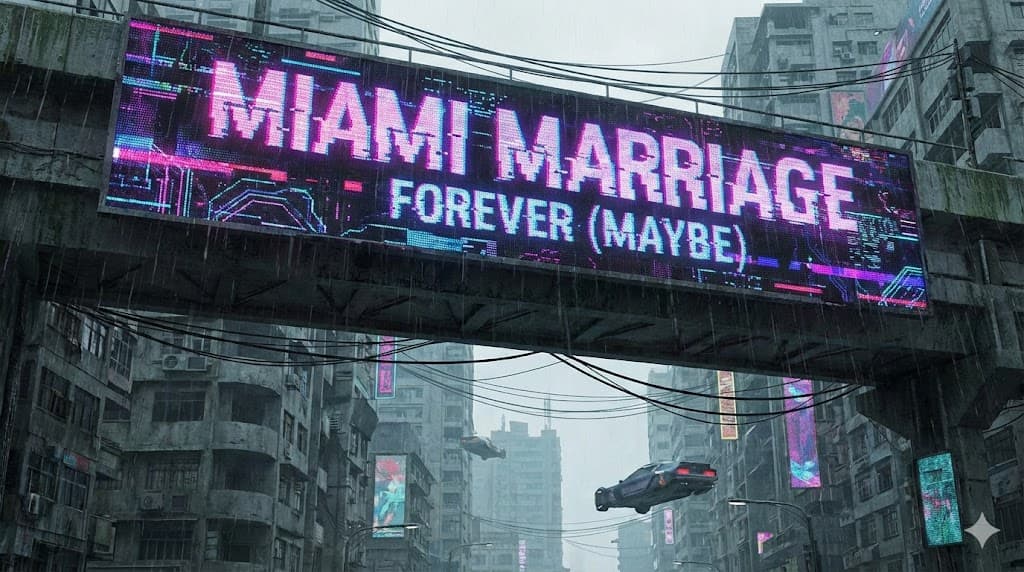
Part I: The Genesis of a Digital City-State
The Tweet Heard Around the World
The mythology of Miami’s transformation from a hospitality capital to a purported technology metropolis began not with an infrastructure bill, nor a university endowment, but with a tweet. On December 4, 2020, amidst the suffocating lockdowns of the San Francisco Bay Area, Delian Asparouhov, a principal at Founders Fund, broadcast a simple provocation to the digital ether: “ok guys hear me out, what if we move Silicon Valley to Miami.”
The response from Miami Mayor Francis Suarez was swift, succinct, and destined to become the slogan of a movement: “How can I help?”.
This interaction, viral in its reach and simplistic in its promise, marked the inception of a high-stakes experiment in municipal branding and crypto-urban statecraft. It was a moment of perfect asymmetrical warfare; San Francisco was paralyzed by the pandemic, struggling with a homelessness crisis, and hemmed in by a high-tax regime. Miami, conversely, was open, sun-drenched, and seemingly devoid of the regulatory friction that had begun to grate on the libertarian instincts of the venture capital class.
But to view this merely as a social media success story is to miss the deeper geopolitical and economic undercurrents. The migration that followed was driven by a specific ideological alignment. Prominent investors like Keith Rabois, also of Founders Fund, did not just move to Miami for the weather; they moved as a form of protest against what they viewed as the "miserable" governance of California. Rabois, an early executive at PayPal and a significant figure in Silicon Valley, framed Miami not just as a city, but as a bastion of American dynamism—a place where the "how can I help" ethos replaced the "you can't do that" bureaucracy of the West Coast.
This narrative was intoxicating. It suggested that a tech ecosystem could be willed into existence through sheer force of personality and tax arbitrage. The Mayor became a fixture on national news, touting Miami as the next global capital of capital, a "Web3" utopia where the government would be funded not by taxes, but by the yield of its own cryptocurrency. The rhetoric was grand, positioning Miami as a "model twenty-first-century city" that would decouple governance from the messy, physical constraints of traditional urban management.
Yet, beneath the hype lay a fragile foundation. The movement was heavily weighted towards cryptocurrency and venture capital—sectors prone to extreme volatility—rather than the deep engineering and R&D that anchor true technology hubs. The initial influx was less a migration of companies and more a migration of wealth; hedge funds and family offices moved in, but the battalions of software engineers required to build the next Google or OpenAI were largely absent.
The Ideological Architecture of the Migration
The early years of the Miami tech boom (2020–2021) were defined by a distinct cultural friction. The arriving technocrats were not merely seeking lower taxes; they were seeking a new social contract. They found in Miami a "tabula rasa"—or at least, they thought they did. The city's historically transactional politics and pro-development stance seemed to offer a frictionless environment for innovation.
However, this vision often ignored the complex realities of the city itself—a metropolis on the front lines of climate change, struggling with severe income inequality and a fragile infrastructure. The "Tech Bro" archetype became a recognizable, and increasingly polarized, figure in neighborhoods like Wynwood and Brickell. They brought with them a specific aesthetic and economic philosophy: crypto-libertarianism.
This philosophy manifested in the physical transformation of the city. Wynwood, once a gritty warehouse district turned art hub, began to morph into a campus for crypto-startups and VC firms. Founders Fund signed a lease in Brickell, signaling to the market that the "smart money" was long on Miami. Atomic, a venture studio, and OpenStore, Rabois’s e-commerce startup, planted flags in the city, promising to hire hundreds of engineers.
The narrative was powerful because it was binary. San Francisco was "dying," a victim of its own progressive excesses. Miami was "rising," a testament to freedom and market-based governance. This binary was pushed relentlessly by a cadre of influential investors on Twitter, creating a feedback loop that attracted billions in real estate investment and prompted a gold rush mentality. But as with all gold rushes, the distinction between the prospectors and the settlers would eventually become clear.
Part II: The Crypto-Urbanist Gamble
The Rise and Ruin of MiamiCoin
If the "How can I help?" tweet was the movement's genesis, MiamiCoin ($MIA) was its totem. Launched in August 2021, the token was built on the Stacks protocol, designed to generate yield for the city through a mining process. It was a novel concept: a voluntary tax paid by speculators in exchange for the hope of future appreciation.
Mayor Suarez championed MiamiCoin with the zeal of a convert. He famously suggested that the revenue from the protocol could one day allow the city to eliminate municipal taxes entirely, effectively running the government on the "yield" of its digital brand. In February 2022, the city received a disbursement of over $5.2 million from the protocol, which was earmarked for a rental assistance program. For a brief moment, the experiment seemed to work. It was hailed as "crypto-urban statecraft," a way to monetize civic pride.
However, the economics of MiamiCoin were fundamentally circular. The value of the token depended entirely on new money entering the ecosystem. It had no utility outside of speculation. When the broader crypto market turned bearish in early 2022, the collapse was swift and brutal.
By May 2022, MiamiCoin had lost over 95% of its value from its peak. The "free money" machine had stopped. The situation deteriorated further in 2023 when the centralized exchange OkCoin—the primary liquidity venue for the token—suspended trading due to "limited liquidity" and risks of fraud.
The suspension left holders with bags of worthless digital assets. The MiamiCoin City Wallet, once valued at over $24 million, plummeted to less than $7 million. The narrative of a city funded by code dissolved into a cautionary tale of municipal speculation. Critics, who had been silenced during the bull run, now pointed to MiamiCoin as proof that the city’s tech ambitions were built on "smoke and mirrors". The project’s failure was absolute; by 2024, it was effectively defunct, a digital ghost town mirrored by the physical emptiness of the "crypto centers" that had sprung up during the boom.
The FTX Catastrophe: A Branding Disaster
While MiamiCoin was a localized failure, the collapse of FTX was a global catastrophe with Miami at its epicenter. The cryptocurrency exchange, led by Sam Bankman-Fried, had purchased the naming rights to the Miami Heat’s arena for $135 million in a 19-year deal. The "FTX Arena" was meant to be the crown jewel of the Crypto Coast, a permanent symbol of the industry's dominance.
When FTX filed for bankruptcy in November 2022 amidst allegations of massive fraud, the symbolism inverted. The arena, still emblazoned with the FTX logo for months after the collapse, became a monument to hubris. Miami-Dade County was forced to petition a bankruptcy court to remove the name, eventually replacing it with Kaseya, a local IT management firm.
The reputational damage was severe. The collapse of FTX, followed by the arrest of Bankman-Fried, tainted the entire "Miami Tech" brand. The city had bet the house on crypto, and the house had lost. Startups that had nothing to do with crypto found themselves guilty by association. The "Tech Hub" label, once an asset, became a liability for companies trying to raise capital in a market that had suddenly rediscovered the value of due diligence.
The Closure of Recur
The contagion spread to local champions. Recur, a Miami-based NFT platform that had raised $50 million in Series A funding at a $333 million valuation, announced in August 2023 that it would wind down operations. Recur was supposed to be a success story—a company building licensed NFT experiences for major brands like Hello Kitty and Nickelodeon. Its failure signaled that even well-capitalized, "legitimate" Web3 companies could not survive the nuclear winter of the crypto crash.
Recur’s closure was particularly damaging because it undercut the narrative that Miami was building "real" companies. If a firm with $50 million in the bank and major IP partnerships could not sustain itself, what hope did the smaller, bootstrapped startups have? The "Crypto Capital" was rapidly becoming a graveyard of digital assets.
Part III: The Great "Boomerang" to San Francisco (2023–2025)
The Generative AI Pivot
As the crypto winter set in, the technology industry underwent a tectonic shift. The release of ChatGPT in late 2022 ignited the Generative AI boom. Unlike the crypto boom, which was decentralized and benefited from Miami’s lack of regulation, the AI boom was intensely physical. It required massive compute power, deep research talent, and proximity to the epicenter of the industry: San Francisco.
The "network effects" of the Bay Area, which Keith Rabois and others had declared dead, roared back to life. AI research is a dense, collaborative field. The engineers building Large Language Models (LLMs) wanted to be where the action was—in the coffee shops of Hayes Valley (now dubbed "Cerebral Valley") and the offices of OpenAI and Anthropic.
Miami, with its focus on crypto and fintech, was caught flat-footed. It had no major research university with a top-tier computational linguistics program. It had no history of semiconductor engineering. It was, structurally, irrelevant to the new paradigm.
The Return of the Prodigal Sons
The most stinging indictment of the Miami experiment came from its own architects. By 2024, reports surfaced that Keith Rabois, the most vocal critic of San Francisco, was spending increasing amounts of time back in the Bay Area and renovating a home there.
More significantly, the companies followed the talent. Delphi, an AI startup that had raised funding from Rabois in Miami, relocated to San Francisco to access a deeper pool of engineering talent. OpenStore, Rabois’s own company, opened an engineering hub in the Bay Area because it struggled to fill specialized roles in Florida.
This phenomenon, dubbed the "Boomerang Effect," revealed the limitations of tax arbitrage. For a high-growth tech company, the cost of talent is secondary to the availability of talent. Saving 13% on state income taxes is irrelevant if you cannot hire the engineers needed to build the product.
The Data of the Exodus
The numbers from 2024 and 2025 paint a stark picture of this reversion. According to data from Carta, California’s share of U.S. venture capital raised jumped to nearly 49% in 2024, widening the gap with the rest of the country. In contrast, Florida’s share of VC funding fell to 1.5%.
Table 1: The Divergence in Tech Talent and Capital (2024–2025)
| Metric | San Francisco Bay Area | New York City Metro | Miami / South Florida |
|---|---|---|---|
| VC Funding Share (2024) | 48.79% (State of CA dominated by SF) | 10.57% (State of NY) | 1.5% (State of FL) |
| Net New Tech Hires (12 mo. period) | +10,970 | +5,690 | +368 |
| AI Job Growth | +150,000+ postings (State level) | High | Negligible in comparison |
| Office Vacancy (Tech Corridors) | High (but absorbing AI growth) | Stable | 19.7% (Wynwood) |
Sources: Carta, SaaStr/Pave, CBRE, Newmark.
The data in Table 1 is devastating for the "Miami as Tech Hub" narrative. The city added a net total of 368 tech hires in a period where San Francisco added nearly 11,000. This is not a rivalry; it is a rounding error. The "Talent Density" in Miami simply never materialized. The senior engineers—the L6 and L7 staff at Google or Meta—did not move. They stayed in the Bay, or they moved to New York.
Part IV: The Structural Deficiencies of the Magic City
The Talent Pipeline Problem
Why did the talent not come? The answer lies in the structural deficiency of Miami’s educational and professional pipeline. A true tech hub requires a symbiotic relationship between research universities and private industry. Stanford and Berkeley feed Silicon Valley; MIT and Harvard feed Boston.
Miami has the University of Miami (UM) and Florida International University (FIU). While both institutions have received significant grants from the Knight Foundation to expand their computer science programs—$15 million cumulatively building a research ecosystem takes decades. The current output of graduates is insufficient to support a major tech cluster, and more importantly, the region lacks the "anchor tenants" that train junior talent.
In Silicon Valley, a junior engineer joins Google or Facebook, learns best practices for two years, and then spins off to found a startup. In Miami, that training ground does not exist. The largest "tech" employer, Kaseya, focuses heavily on IT management, sales, and account executives rather than deep software engineering. This creates a "hollow" middle class in the tech sector; there are entry-level support roles and wealthy executives, but very few senior builders.
The "Sales Hub" Reality
This leads to the most accurate characterization of Miami’s current status: it is a Sales and Executive Hub, not an Engineering Hub. Companies like Kaseya have committed to hiring thousands of employees, but a closer look at the roles reveals a heavy bias toward sales and account management.
The "Hub and Spoke" model adopted by many firms involves keeping the CEO and the sales team in Miami (to enjoy the lifestyle and tax benefits) while maintaining the engineering team in a high-cost, high-talent jurisdiction like San Francisco or London. MaintainX, a software company cited as a Miami success, lists its headquarters in San Francisco on many platforms while maintaining a presence in Miami. This fragmentation benefits Miami’s tax base but does not create the knowledge spillovers that define a true innovation ecosystem.
The Physical Infrastructure Gap
Beyond the digital realm, Miami’s physical infrastructure poses a significant barrier to the density required for a tech hub. The city is notoriously car-dependent, with a fragmented public transit system that pales in comparison to BART or the NYC Subway. The "last mile" problem separates the various nodes of the tech scene—Brickell, Wynwood, and Coconut Grove are islands separated by gridlock.
Furthermore, the existential threat of climate change casts a long shadow over capital investment. The "Crypto-Urbanist" vision of 2021 ironically coincided with a period of intensifying climate anxiety. Insurance premiums in Florida have skyrocketed, and the long-term viability of coastal real estate is a constant background calculation for any firm considering a 20-year headquarters lease.
Part V: The Human Cost – Gentrification and Displacement
The Rent Crisis
For the local population of Miami, the tech boom was not an economic miracle; it was an affordability crisis. The influx of high-earning remote workers and finance professionals drove housing costs to stratospheric levels. Between 2020 and 2024, Miami consistently ranked as one of the most unaffordable housing markets in the United States relative to local wages.
The sentiment on the ground is one of anger and resignation. In local forums, residents describe a city that has become hostile to its own working class. "Miami rent is officially a luxury item," one resident lamented in a widely circulated discussion. "$2,162 for a studio? The market's not broken; it's working exactly as intended for investors, not locals. At this rate, 'affordable housing' will mean finding a good spot under I-95".
Another resident, reflecting on the rapid changes, noted, "I 100% believe everyone should move out of their hometown... I hate it here towards the end... extreme gentrification... overpriced and overhyped restaurants". The feeling of being "priced out of paradise" is pervasive. The "Tech Bro" became a scapegoat for a broader inflationary environment, representing the widening gap between the global capital flowing into the city and the stagnant wages of the service workers who keep it running.
Climate Gentrification in Liberty City
Nowhere is this dynamic more painful than in the phenomenon of "climate gentrification." Miami’s topography is counter-intuitive; the wealthiest areas (Miami Beach) are often the lowest lying, while historically Black and impoverished neighborhoods like Liberty City and Little Haiti sit on the Atlantic Coastal Ridge, the highest ground in the city.
As developers woke up to the reality of sea-level rise, capital began to flow inland. Speculators targeted these high-elevation neighborhoods, marketing them as "climate-resilient." The result has been the displacement of long-term residents.
"Liberty City is ground zero for climate gentrification," argues Adrian Madriz, a housing advocate. "Even if it rains, the neighborhood never floods". The arrival of tech and finance capital accelerated this process. Development projects like the Magic City Innovation District in Little Haiti promised jobs but delivered rising property taxes and eviction notices.
The narrative of "revitalization" clashed violently with the reality of displacement. Residents viewed the "How can I help?" slogan as a cynical joke—help for whom? The billionaire moving his family office to Brickell, or the grandmother in Liberty City watching her rent double?
The Cultural Clash
The friction was not just economic; it was cultural. The "Miami Tech" scene developed a reputation for brashness and superficiality that alienated locals. The "BBLified latino culture" mentioned by one critic collided with the Patagonia-vested aesthetic of the VC class.
There was a palpable sense that the newcomers treated Miami not as a community, but as a playground or a tax haven. The transient nature of the tech population—many of whom left as soon as the crypto market crashed or the summer heat set in—reinforced this view. They were tourists with equity, extracting value from the city’s brand without contributing to its civic fabric.
Part VI: The Real Estate Façade
The Wynwood Bubble
Wynwood serves as the physical manifestation of the tech movement’s contradictions. Once a neighborhood of graffiti-covered warehouses, it was aggressively rezoned and redeveloped into a tech and creative campus. Developers poured billions into Class A office space, anticipating a flood of tenants from California and New York.
By 2025, the reality is a market defined by high vacancies and aggressive pricing. The vacancy rate in the Wynwood/Design District submarket hovered near 19.7%, significantly higher than the broader Miami market. Yet, asking rents remained stubbornly high, often exceeding $100 per square foot.
Table 2: Office Market Disconnect (Q3 2025)
| Submarket | Vacancy Rate | Asking Rent (Class A) | Narrative |
|---|---|---|---|
| Wynwood/Design District | 19.7% | ~$110.00 PSF | The "Tech Hub" – Overbuilt, expensive, seeking tenants. |
| Brickell | Lower | ~$104.71 PSF | "Wall Street South" – Stronger demand from finance/law. |
| National Average | 20.4% | ~$35.88 PSF | General commercial real estate struggles. |
This data suggests a speculative bubble in tech-specific real estate. Developers built for a demand that never fully materialized. While finance firms filled the towers in Brickell, the creative lofts of Wynwood remain partially empty, waiting for the startups that boomeranged back to San Francisco.
The "Wall Street South" Pivot
If the "Tech" narrative failed, the "Finance" narrative succeeded. The migration of Citadel, Thoma Bravo, and numerous hedge funds is real and substantial. Ken Griffin’s plan to build a headquarters in Brickell is a tangible commitment of capital that dwarfs any tech investment in the region.
However, finance is not tech. A hedge fund office creates wealth, but it does not create the open-source culture, the hackathons, or the rapid iteration that characterizes a tech ecosystem. Miami has become "Wall Street South," a satellite of New York, rather than "Silicon Valley South." The city’s economy has diversified, but it has done so by doubling down on wealth management and real estate, sectors that exacerbate inequality rather than mitigate it.
Part VII: Critical Takes and "Smoke and Mirrors"
The Skeptics Were Right
As the dust settles on the hype cycle, the critics who were dismissed as "FUD" (Fear, Uncertainty, Doubt) spreaders in 2021 appear vindicated. The Brookings Institution’s early warning that crypto-urbanism was a "performative" strategy with "few long-term job gains" has proven accurate.
The "smoke and mirrors" critique is pervasive. In a post-mortem of the crypto crash, one former executive described the Miami scene as entirely hollow: "It's smoke and mirrors. There's no real money here anymore". This sentiment reflects the ephemeral nature of the boom. When the liquidity dried up, the community evaporated.
The "Fake it Till You Make It" Governance
Mayor Suarez’s role in this saga is complex. To his supporters, he put Miami on the map, attracting billions in media value and shifting the global perception of the city. To his critics, he engaged in a dangerous form of municipal pump-and-dump. By tying the city’s brand to volatile assets like MiamiCoin and FTX, he exposed the public sector to reputational contagion.
The city’s pivot to "Anti-Woke" branding also had consequences. While it attracted a specific demographic of conservative founders, it alienated the broader, more liberal talent pool of the tech industry. As Delian Asparouhov noted in a candid moment, the initial move was driven by frustration with San Francisco’s COVID policies. Once those policies ended, the primary motivator for the migration vanished.
Part VIII: Conclusion – The Satellite City
The Verdict
Miami is not a tech city. It is a city with tech workers. The distinction is vital. A tech city generates innovation; it is a net exporter of intellectual property. Miami remains a net importer of wealth and a consumer of technology.
The "Miami Tech Movement" of 2020–2025 was a capital migration event, not a structural economic shift. It was driven by low interest rates, high taxes in blue states, and a cultural backlash against the constraints of the pandemic. When those conditions normalized—when interest rates rose, the crypto bubble burst, and AI demanded physical proximity to San Francisco—the tide went out.
What Remains?
This is not to say the city is empty. The legacy of the boom is visible in the skyline of Brickell and the high rents of Edgewater. Miami has successfully rebranded itself as a global capital for the wealthy. It is more expensive, more cosmopolitan, and more unequal than it was in 2019.
Companies like Kaseya and the burgeoning fintech sector provide a floor for the local tech economy. But the dream of displacing Silicon Valley was a mirage. The "Magic City" worked its magic on the media cycle, but it could not overcome the gravity of agglomeration economics.
For the young engineer looking to build the next era-defining AI, the path still leads to the rainy streets of San Francisco. For the hedge fund manager looking to preserve their capital in a zero-income-tax jurisdiction, the path leads to Miami. The city has found its niche, but it is not the one that was promised in the tweet.
Detailed Data Appendix
Table 3: The Lifecycle of a Hype Cycle – Key Events
| Date | Event | Significance |
|---|---|---|
| Dec 4, 2020 | The "How can I help?" Tweet | The ignition point of the movement. |
| June 2021 | Bitcoin 2021 Conference | Peak Hype; 12,000 attendees in Wynwood. |
| Aug 2021 | MiamiCoin Launch | The beginning of "Crypto-Urban Statecraft." |
| Nov 2022 | FTX Bankruptcy | The collapse of the "Crypto Capital" branding. |
| Mar 2023 | MiamiCoin Delisted | The official failure of the municipal token project. |
| Aug 2023 | Recur Shutdown | Failure of a major VC-backed local startup. |
| Jan 2024 | Keith Rabois "Boomerang" | Symbolic return of key boosters to San Francisco. |
| Q3 2024 | SF VC Dominance | California captures ~49% of VC; FL drops to 1.5%. |
Table 4: Cost of Living vs. Wages (The "Sunshine Tax")
| Metric | Miami | National Average | Impact |
|---|---|---|---|
| Rent-to-Income Ratio | Highest in Nation (often >40%) | ~30% | Severe displacement of service class. |
| Tech Salary (Avg) | ~$85k - $107k (e.g., Kaseya) | ~$115k+ | "Miami Discount" persists for workers. |
| Senior Dev Salary | ~$140k - $160k | $200k+ (SF/NYC) | Talent prefers higher absolute comp in hubs. |
Sources: Zippia, Salary.com, Realtor Association of Miami.
Final Reflections
The story of Miami tech is a story of America in the 2020s: polarized, financialized, and deeply restless. It reflects a desire to find a "Third Way" outside the stagnation of legacy institutions. That Miami failed to become Silicon Valley is less a failure of the city and more a testament to the immense, enduring power of the clusters that already exist. You can tweet a movement into existence, but you cannot tweet an ecosystem into permanence. The neon lights of the FTX Arena have been taken down, but the rent checks are still due.


