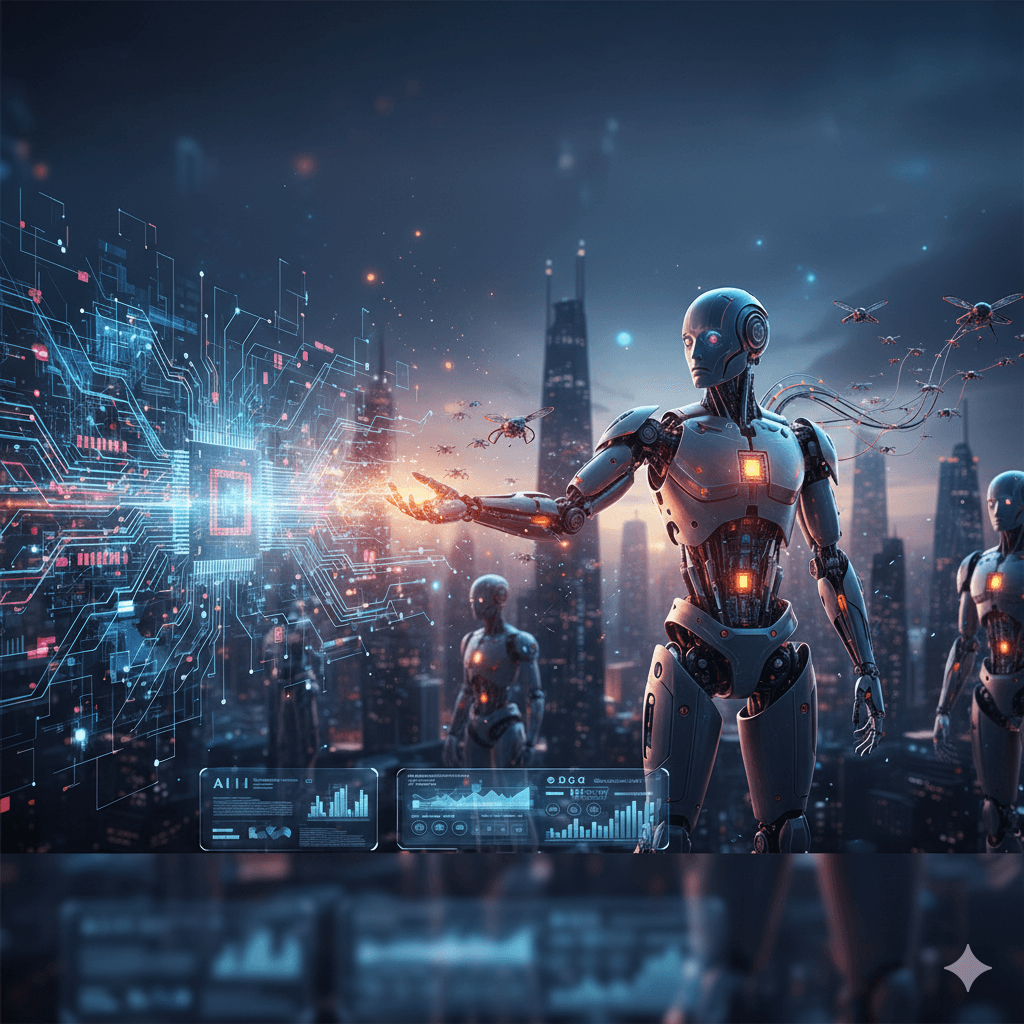
Robots Are Getting World Models (and That Changes the Job)
I used to think the hard part of robotics was the robot.
Then you ship something into a real room and learn the truth: the room is the final boss. The room contains sunlight at the wrong angle, floors with opinions, and a chair that has been moved three inches to the left for reasons known only to chaos.
That’s why I pay attention when a GPU company starts talking like a robotics lab. Not because I’m eager to buy more silicon, but because vendors don’t pivot to “platform” language unless customers have been quietly bleeding out on the same problem.
The problem is not that we can’t write clever controllers. The problem is that clever controllers are brittle, and reality is an infinite fuzz tester.
Cosmos, GR00T, Isaac—whatever brand names you want to staple on it—the message underneath is simple: robotics is shifting from “write the right algorithm” to “run the right loop.” The work moves from a single hero model to a pipeline that can generate variation, train at scale, and punish you quickly when you start believing your own demo.
If you’ve built software professionally, this should feel familiar. The hardest part is rarely the endpoint that looks impressive in a screenshot. It’s the unglamorous machinery: repeatable builds, test coverage that catches regressions, telemetry that tells you what actually happened, and a rollback story that doesn’t require prayer.
Robotics is being dragged into that world, whether it wants to go or not.
The immediate temptation is to treat “world models” as a magic trick. But the real value is more boring: cheaper iteration. If you can generate useful variants of the world—lighting, textures, layouts, timing, disturbances—you don’t need to wait for reality to surprise you. You can surprise yourself in simulation first, and you can do it ten thousand times before lunch.
The catch is that simulation can lie, too. It’s very easy to build a perfect little universe where your robot is undefeated. That’s why evaluation is the moral center of the project. Not the physics engine. Not the architecture diagram. Evaluation.
The most dangerous sentence in robotics remains: “it works.”
It usually means: it worked in the room you trained it in.
So yes, I think robots are getting world models. But the bigger shift is cultural: robotics is starting to look like DevOps. The teams that win will be the ones who can run fast, honest loops—collect signals, train, evaluate, deploy cautiously, and learn from failures without turning every iteration into a bespoke emotional event.
And if that sounds boring, good. Boring is what you call reliability after you’ve earned it.

